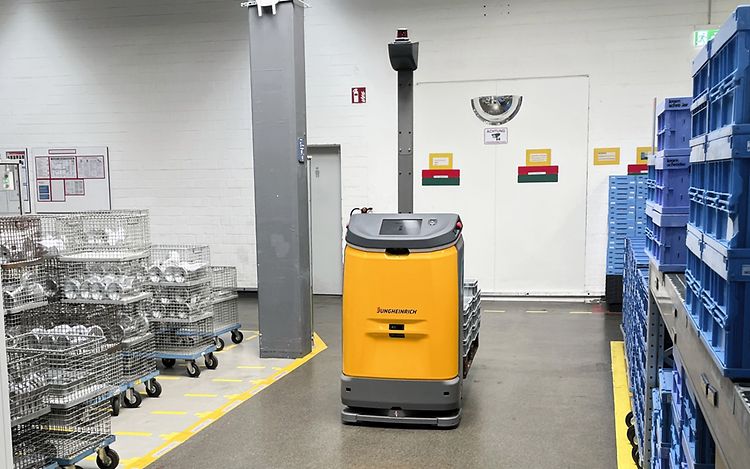
Intelligent automation for high-lift applications: Jungheinrich launches Mobile Robot EAC 212a
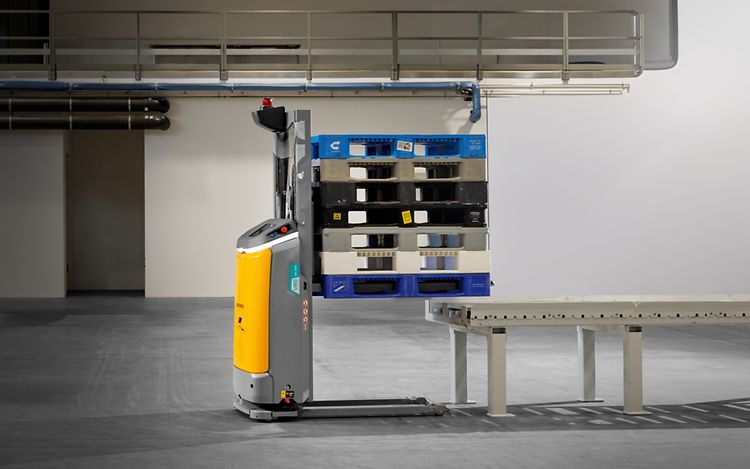
With the Mobile Robot EAC 212a, Jungheinrich expands its portfolio with an autonomous solution for high-lift applications.
- Connecting fully automated material flows: Automated storage and retrieval processes up to 1,200 mm transfer height with a load capacity of 1,200 kg
- Stable processes in mixed operations: AI-based 3D pallet detection compensates for ±100 mm positional deviation and ±10° torsion
- Fast and easy integration without structural modifications thanks to autonomous, contour-based navigation
- Optimum protection for people, goods and infrastructure: Obstacles are automatically detected and avoided
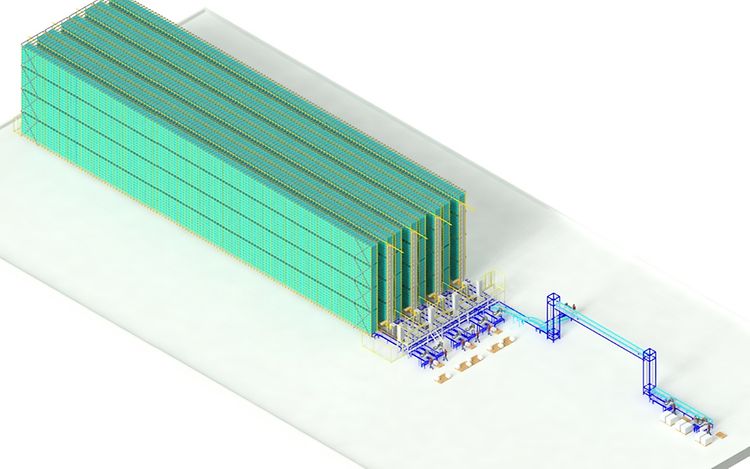
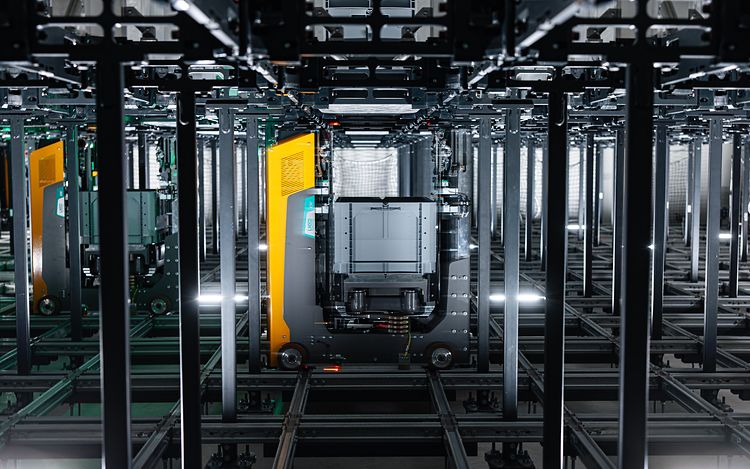
Hamburg – Jungheinrich presents the EAC 212a, an autonomous mobile robot for high-lift transport tasks in logistics and production environments. The vehicle handles pallets and stillages at floor storage locations, conveyor systems or buffer lanes. Integration with automated storage and retrieval systems (AS/RS) is also possible.
With a load capacity of up to 1,200 kg and a travel speed of up to 6 km/h, the EAC 212a supports reliable and cost-efficient material flow. Manual interfaces at transfer points are reduced, increasing process stability and system availability.
“By adding the EAC 212a to our portfolio, we are specifically expanding our range with an autonomous solution for high-lift applications. Our customers can fully automate their storage and retrieval processes while significantly reducing manual intervention and potential sources of error,” explains Jonas Radtke-Payne, Product Manager at Jungheinrich.
Precise load handling for robust processes
In high-lift applications, the quality of load handling determines overall system stability. The EAC 212a is therefore equipped with AI-based 3D pallet detection that reliably identifies and handles load carriers even in the event of positional deviations. Offsets of up to ±100 mm and torsion of ±10° are automatically compensated by the intelligent system.
This ensures stable processes even when pallets are positioned manually and are not placed exactly at the intended location. Unplanned interruptions are reduced and productivity is increased.
“Our intelligent pallet detection ensures that the EAC 212a operates reliably under real-life conditions. This is a decisive factor for stable workflows, particularly in mixed operations involving manual processes,” says Jonas Radtke-Payne.
Integration without modifying existing layouts
The EAC 212a offers exceptionally low implementation effort thanks to contour-based navigation using natural environmental features. Using LiDAR sensors, the vehicle creates a map of the existing environment and subsequently navigates independently. Artificial landmarks or structural modifications to existing warehouse layouts are not required. This shortens project lead times, reduces investment costs and allows layout adjustments to be implemented with ease.
Thanks to VDA 5050 compatibility, the mobile robot can be easily integrated into higher-level control and host systems. Traffic areas and process logic can be flexibly adapted at any time to meet changing requirements.
Safe material flow in dynamic environments
The EAC 212a is designed for mixed operation alongside people and manual industrial trucks. A 360° safety sensor system continuously monitors the vehicle’s surroundings. Unexpected obstacles in the direction of travel are detected from a height of just 70 mm and autonomously avoided.
This increases operational safety and stabilises material flow – even in high-frequency production and logistics areas. An integrated display with an intuitive user interface supports rapid fault resolution directly at the vehicle and reduces downtime.
High availability through automatic opportunity charging
For cost-efficient continuous operation, the EAC 212a is equipped with a fully integrated 130 Ah lithium-ion battery and utilises an automatic opportunity charging concept. Via the higher-level control system, the mobile robot can be instructed to travel independently to the charging station during short breaks between jobs and resume transport tasks after a short charging time.
This minimises manual intervention, increases effective operating time and improves planning reliability in fleet operations.
Scalable and future-proof
The EAC 212a is designed as a scalable solution. Projects can start with only a few vehicles and be expanded as required. Over-the-air updates enable the continuous development of functions and additional use cases.
“Automation must be able to grow alongside our customers’ requirements. That is why the EAC 212a has been designed from the outset as a scalable and future-proof solution,” emphasises Jonas Radtke-Payne.
With its combination of precise load handling, intelligent navigation and high load capacity, the EAC 212a provides a technically robust solution for companies seeking to automate their high-lift processes reliably, safely and efficiently.
Market launch is scheduled for the second half of 2026.