Our path to a strong community
Responsibility for our employees, customers and society is an integral part of our sustainability strategy. We promote a safe, fair working environment, take responsibility along the supply chain and are committed to the common good – today and for future generations.
Focus on the common good
Sustainable corporate governance also means taking responsibility for society and the communities in which we operate. At Jungheinrich, this is done with complete commitment – strategically anchored and actively promoted from within the company.
Sustainable leadership
The Yellow Way describes our approach to responsible action – economically, ecologically and socially. It reflects our corporate culture and combines entrepreneurial performance with sustainable impact. By "Leading the Yellow Way", managers support our employees in living up to their responsibilities and getting involved: for each other, for our customers and for our environment. This is how we shape our future together in an impact-oriented manner.

Partnerships for social responsibility
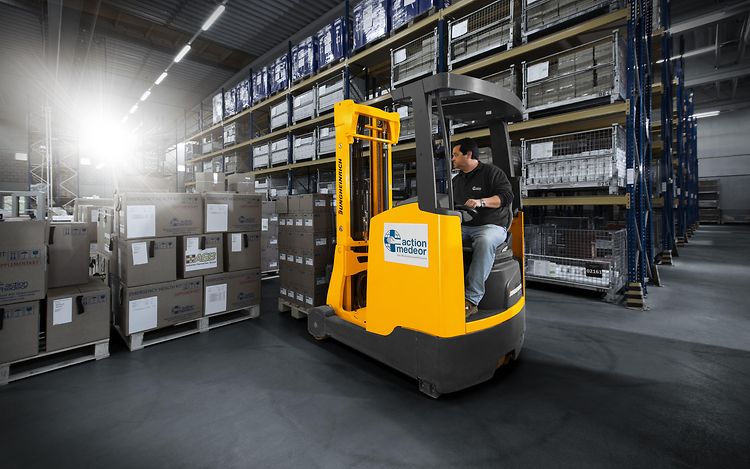
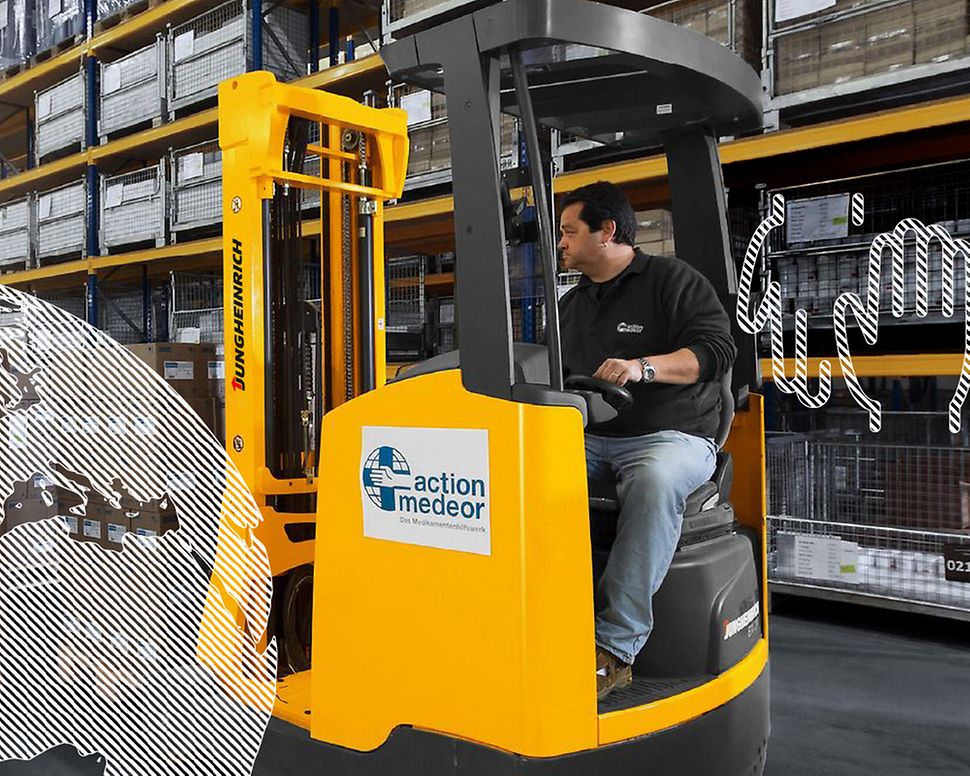
For many years, Jungheinrich has been working with strong partners to promote social responsibility. With our logistics expertise and financial resources, we support action medeor, Europe's largest medical aid organisation, in providing people in crisis regions with vital medicines quickly. In our partnership with Children for a Better World, we work together to promote equal opportunities and open up new perspectives for children and young people.

Small contribution with a big impact
With the “Restcent” (spare change) campaign, Jungheinrich employees are taking on social responsibility. By voluntarily donating the spare change from their monthly salaries, they are supporting charitable projects run by action medeor, which helps people in need. Jungheinrich doubles every amount donated, thereby reinforcing the commitment by its employees. For us, this is solidarity in action in the spirit of the Yellow Way.

Providing rapid assistance when it matters most
In addition to long-term partnerships, we also offer support in acute emergency situations. In 2023, for example, we provided assistance following the earthquake disaster in Turkey and Syria and to those affected by the flood disaster in Slovenia. This involved the use of financial resources and donations from employees. Jungheinrich doubled the donations and supported the provision of relief supplies on site.
Jungheinrich employees roll up their sleeves
Not only we as a company, but also our employees are socially engaged in their work. Under the "Enabler@work" initiative, we bring together these global volunteer projects and measures and present them regularly on our internal sustainability platform.
You can view a selection of international activities further down the page.
The Dr Friedrich Jungheinrich Foundation has been promoting education, science and research since 2004. It awards scholarships and prizes and supports projects in electrical engineering, logistics, mechanical engineering and the STEM subjects.
Global commitment realised regionally
Some examples of the sustainable Enabler@work commitment of Jungheinrich employees at their locations.
Taking action to preserve the rainforest
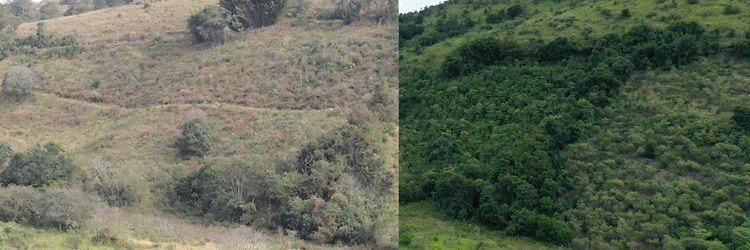
Jungheinrich has set itself the goal of promoting green material handling in Brazil, while also contributing to the reforestation of the Atlantic rainforest. For every electric forklift truck sold in Brazil that replaces a diesel or gas-powered truck, 30 trees are planted in the ‘Mata Atlântica’. The Mata Atlântica is a unique tropical forest, one of the most species-rich and biologically diverse in the world. However, it is also one of the most endangered tropical forests in the world. As one of the largest ecosystems in South America, the Mata Atlântica plays an important role in global climate management as a CO2 reservoir. In collaboration with the NGO Associação Copaíba, we have purchased land for the planting of over 20,000 trees and have already planted over 5,500 tree seedlings. The objective of the campaign is to reduce the still very high proportion of combustion engines (52 per cent), contribute to reforestation and, at the same time, promote environmental awareness locally.
As a sustainability enabler, we are using this project to promote SDG 13 – Climate action.
Together for sustainable education
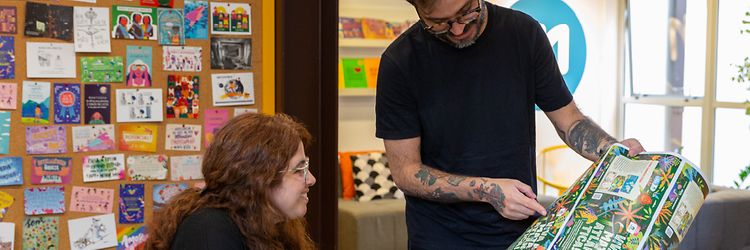
One of Jungheinrich Brazil's sustainability initiatives is to raise awareness among children about the importance of conserving the Atlantic Forest and nature. In collaboration with Editora Mol, a publishing house specialising in social projects, and educational staff from the NGO Copaíba, which is committed to nature conservation and environmental education locally, an educational and entertaining book has been created. The objective is to distribute 10,000 copies of the book, which includes puzzles, games and colourful illustrations, to schoolchildren and their families and friends. To date, almost 3,200 books have been distributed for use in schools. In addition, the books are also utilised in social projects. What’s more, a portion of the proceeds from the sale is donated to Copaíba to further support their projects.
As a sustainability enabler, we are using this project to promote SDG 4 – Quality education.
From tree planting to forest
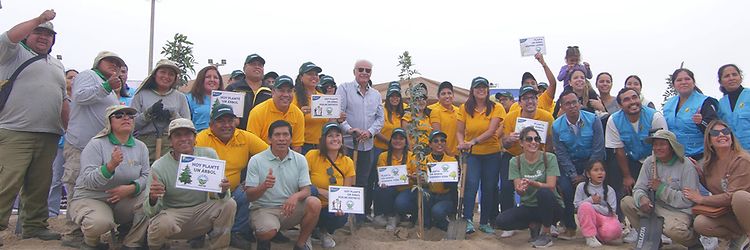
In cooperation with the organisation Entre Árboles and local volunteers, Jungheinrich Peru launched a large-scale tree planting campaign in Villa Mercedes, south of Lima. This was not just a one-off campaign, but the starting signal for the creation of an entire new forest. The aim is to improve air quality in the region and at the same time raise awareness of sustainable practices among the local population.
On planting day, employees, community members and representatives of the local government worked side by side to plant 112 trees – each one a symbol of shared responsibility for future generations. Entre Árboles' expertise helped to select robust species adapted to the dry desert climate and to develop a long-term care plan. The project is a good example of how companies and local communities can take responsibility together and drive positive development.
With this project, we as a sustainability enabler are promoting the goal: SDG 13 – Climate action.
Uniting against heat islands on Environment Day
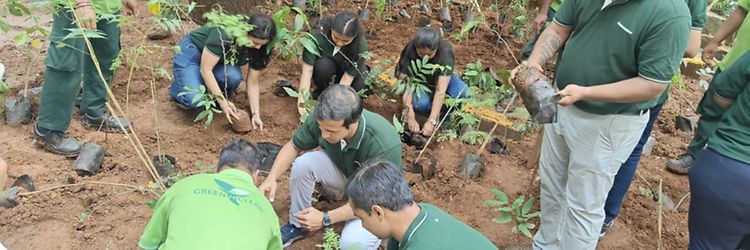
On World Environment Day, Jungheinrich India demonstrated how corporate commitment and environmental protection can work together. Together with the Rotary Club of Bombay Powai, the team planted over 200 trees near the company's headquarters in Mumbai to reduce the so-called heat island effect and strengthen urban green spaces. The particularly effective Miyawaki method was used, which does not require chemical fertilisers and promotes rapid and sustainable growth through densely planted native tree species.
Since 2021, more than 2,700 trees have already been planted as part of Jungheinrich India's CSR programme, with another 2,100 following in 2024. Other initiatives, such as an internal pilot project with a gamification app called "susGain", which motivates and rewards employees for sustainable behaviour in their everyday lives, and promotes training and engagement among local employees.
With these projects, we as a sustainability enabler are promoting the following goals: SDG 4 – Quality education and SDG 13 – Climate action.
Protecting urban biodiversity
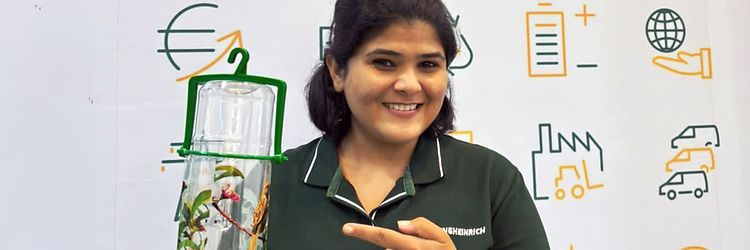
With increasing urbanisation and changing climatic conditions, the number of sparrows has declined significantly in many regions. To draw attention to this development, Jungheinrich India has launched an initiative that focuses on protecting these small but important animals. Employees were encouraged to install birdhouses and feeding stations at home or on company premises, creating places where sparrows and other small birds can feed safely.
This simple but effective measure supports urban biodiversity and helps to strengthen the ecological balance. By supporting even the smallest creatures, we are jointly taking responsibility for a healthy, vibrant environment.
With this project, we as a sustainability enabler are promoting the following goals: SDG 11 – Sustainable cities and communities and SDG 15 – Life on land.
How 100,000 new employees in Bensheim ensure sustainability
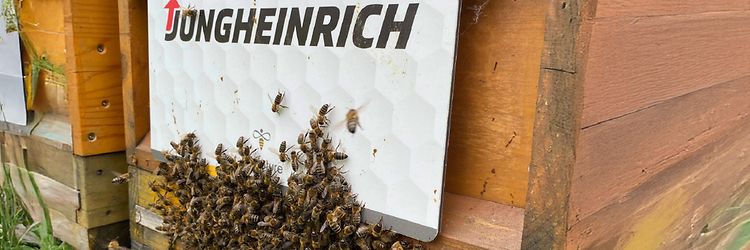
Three years ago, a permanent flowering meadow was created at the Bensheim site. Since 2023, Jochen Seitz, Head of the Sales Centre, has been working with the company beefuture to enrich it with 100,000 buzzing employees. The two beehives not only provide an additional service for the environment and biodiversity, but also deliver a sweet treat for selected customers. Each season, approximately 400 jars of the finest Jungheinrich honey are produced. It is encouraging to note that the project is already being replicated by customers and other companies in the region.
As a sustainability enabler, we are using this project to promote SDG 15 – Life on land.
When environmental awareness meets creativity
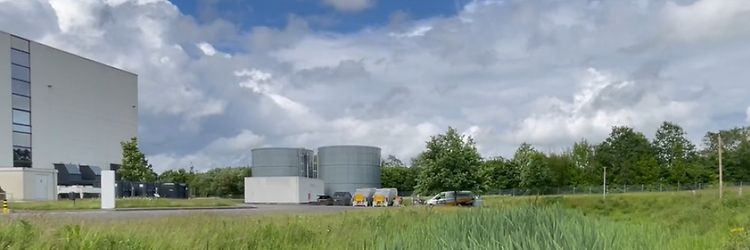
At the Kaltenkirchen site, Environmental Officer Dirk Möller shows how ecological responsibility and economic thinking can go hand in hand. With creative and cost-saving measures, he and his team are transforming the factory premises into an example of sustainability in action.
For example, the "mowing-free May" initiative is creating new biodiversity across more than 220,000 square metres, while flowering areas and orchards provide food for insects – and perhaps soon the first "Jungheinrich apple". Kestrels, reptiles and countless insects have also found new habitats thanks to reptile castles, insect hotels and naturally maintained retention basins. Every year, the "Tree of the Year" is planted as a symbol of growth and conservation.
For the future, the team is planning a sustainable drainage system and meeting rooms in green surroundings. What is being created in Kaltenkirchen inspires far beyond the site itself and shows how environmental protection can be achieved with creativity, commitment and community spirit.
With this project, we as a sustainability enabler are promoting the goal: SDG 15 – Life on Land.
Working together to combat hunger and food waste

For us, fulfilling our social responsibility as a company is part of our understanding of sustainability. How this can be put into practice was demonstrated by the team of interns in the sustainability department at the Group headquarters in Hamburg. Together with dual students and working students, they organised a fundraising campaign for the Hamburg soup kitchen ‘Mit Laib und Seele’ – with an overwhelming response.
The idea of donating unused food after Christmas turned into a large-scale fundraising campaign: employees donated so much non-perishable food that over 30 folding boxes were filled. In addition, the SAP Authorisation Services team collected donations and was able to contribute food worth €1,000.
The initiators themselves helped with the distribution of the food, enabling them to experience first-hand what can happen when individuals take the first step and many others follow suit.
With this project, we as Sustainability Enablers are promoting the following goals: SDG 2 – Zero Hunger and SDG 12 – Responsible Consumption and Production.
Sustainability enters the classroom
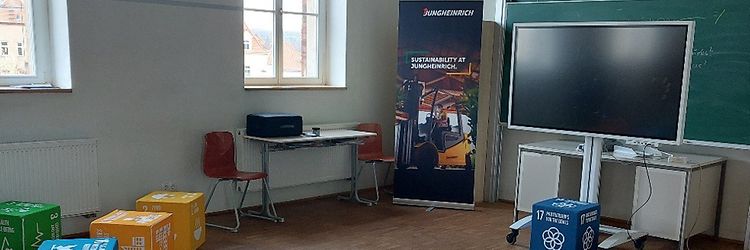
How can you teach schoolchildren about sustainability in a way that not only sticks in their minds but also has an impact? Two employees from the Jungheinrich Used Equipment Centre in Dresden decided to give it a try. Peter Poike , EHS representative at the site, and plant manager Tino Alban organised a whole project day for the Meissen plant school with workshops on environmental and climate protection. With topics such as the CO₂e footprint and the UN sustainability goals, they showed the pupils how much influence their own behaviour has on the climate and resources.
Using CO₂e calculators and everyday examples, they calculated their ecological footprint and developed ideas on how to reduce it. Their initial hesitation quickly gave way to curiosity and enthusiasm. Eight workshops, two dedicated experts and many new insights later, one thing is clear: sustainability can be fun – and knowledge can have an impact.
With this project, we as sustainability enablers are promoting the goal: SDG 4 – Quality education.
Taking responsibility for people and the environment
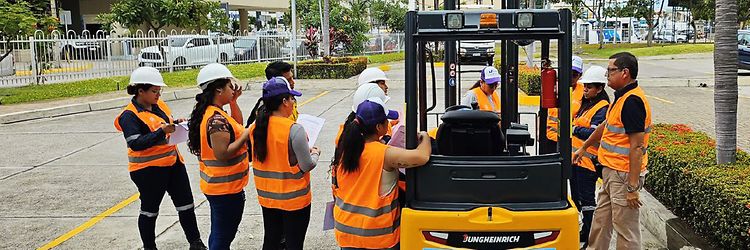
Jungheinrich Ecuador provides a prime example of how a local company can successfully integrate social and ecological sustainability into its operations. Awards such as the ‘Sello Empresa Inclusiva’ seal of inclusion for the inclusive employment of refugees and certification by SICMA Ecuador for environmentally friendly practices and the endeavour to reduce the ecological footprint are proof of the company’s diverse commitment. Furthermore, the Guayaquil Chamber of Industry has acknowledged the promotion of gender equality in the industrial sector through the ‘Red Victoria Project – Forklift’. This initiative challenges traditional job profiles, thereby creating new career opportunities for women.
As a sustainability enabler, we are using these projects to promote SDG 17 – Partnerships to achieve the goals.
Bringing sustainability from company to school
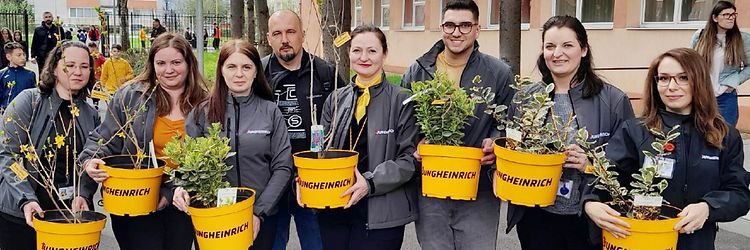
Jungheinrich was the first company to raise awareness of sustainability in Romanian schools during the ‘Green Week’. The presentations included practical discussions about sustainable innovations, their potential applications and effects, as well as topics such as life cycle assessments, lithium-ion batteries and recycling. The presentations were designed to be interactive, resulting in productive discussions with the Jungheinrich team, teachers and pupils. The campaign has left a lasting impression, with the planting of trees that now green the schoolyards.
As a sustainability enabler, we are using this project to promote SDG 4 – Quality education.
On the road to energy independence
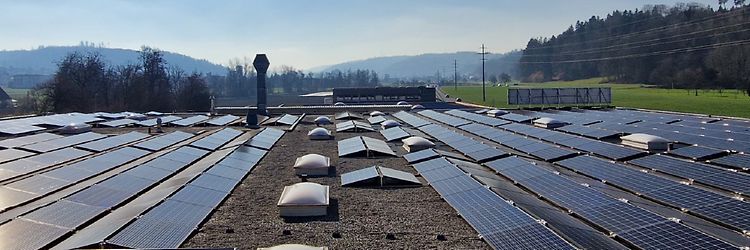
A project in Switzerland demonstrates how energy security, cost efficiency and a reduction in emissions can be achieved simultaneously. Solar cells have been installed on the entire roof area of the sales unit, with the result that up to 405,000 kilowatt hours of electricity are generated each year. There are numerous solar cells on Jungheinrich's roofs, but this is the largest of our solar parks to date. This will result in a reduction in the volume of energy purchased externally and an increase in the use of renewable electricity produced in-house. In addition, the energy generated will be used to power newly installed charging stations that supply the company fleet's electric vehicles with electricity. Further optimisation of the energy usage potential of the solar installation is planned for 2024, including the integration of a new heating system, the switch to a more energy-efficient heat pump and the implementation of an energy storage system.
As a sustainability enabler, we are using this project to promote SDG 7 – Affordable and clean energy.
A social and ecological partnership
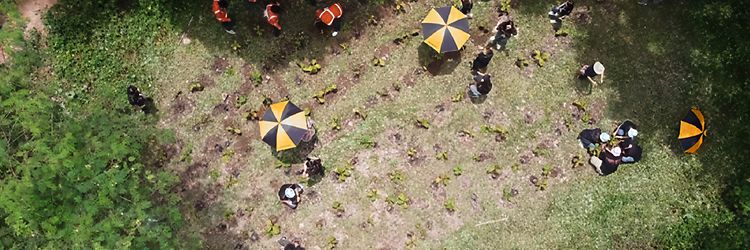
In celebration of its 70th anniversary in 2023, Jungheinrich Thailand organised an event in Nakorn Nayok with over 100 customers. The event, themed ‘Building Relationships and Creating Sustainability in the World’, included a series of nature-based activities and was concluded with a joint tree-planting campaign. These activities served to promote dialogue on the importance of corporate social responsibility (CSR) commitments and Jungheinrich's sustainable orientation.
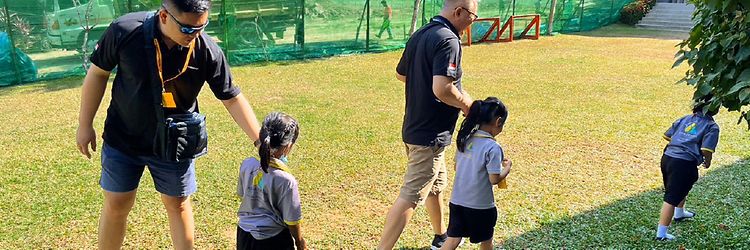
In a further initiative, the APAC Account Management and Marketing team and the Sales Directors collaborated to leverage the momentum of a conference visit to Thailand in order to launch a project supporting a local social enterprise. The Asia Centre Foundation (ACF) in Phuket, which provides educational opportunities for disadvantaged and at-risk Thai children, was selected as the recipient of the initiative. The equivalent of almost EUR 2,550 was donated to ACF; Jungheinrich employees provided numerous donations in kind.
As a sustainability enabler, we are using these projects to promote SDG 17 – Partnerships for the Goals and SDG 3 – Good Health and Well-being.
Sustainable site transformation in Biatorbágy
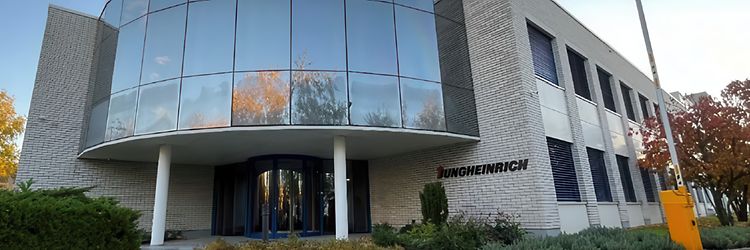
At the Hungarian site in Biatorbágy near Budapest, site manager Zoltán Horváth and his team have successfully implemented innovative projects that have improved operational efficiency, while also making a sustainable commitment to the well-being of employees and the environment. Projects such as ‘Green Car Parks’, ‘Green Commute’, ‘2nd Life Cycle for Tyres’ and ‘Cool Workspace’ support biodiversity, sustainable mobility, the circular economy and the creation of energy-efficient and pleasant workspaces. These examples demonstrate how the sustainable transformation of locations can contribute equally to social, ecological and economic aspects.
As a sustainability enabler, we are using this project to promote SDG 9 – Industry, Innovation and Infrastructure.
Partnership for inclusion and social engagement
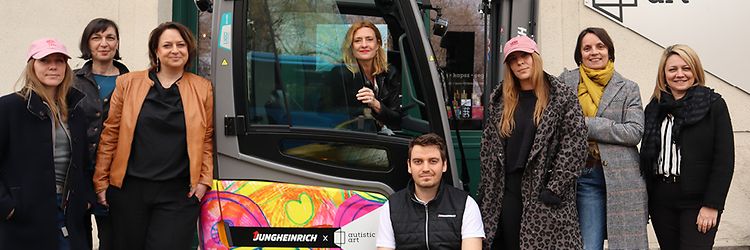
In December 2024, Jungheinrich Hungary began working with the Autistic Art Foundation, and it quickly became clear that this should be more than just a one-off donation. In spring 2025, the team combined a customer survey with social impact: for every completed questionnaire, a donation was made to the foundation.
April 2025 saw a special moment in the partnership: a Jungheinrich forklift truck was given a custom design inspired by the works of a young autistic artist from the Autistic Art programme. Presented at events and in an exhibition, the vehicle became a visible symbol of creativity, inclusion and community engagement.
And Jungheinrich Hungary continued its commitment beyond this. In October, the company supported the foundation's charity auction at the Museum of Fine Arts in Budapest, providing financial assistance as well as logistical support. At the same time, employees took part in a volunteer day at a residential home for autistic people in Boncodfölde, painting rooms and bringing along a bench chosen by the residents. In addition, Christmas gifts for the workforce are deliberately purchased from the foundation.
The partnership shows how joint commitment can have a positive impact on the foundation, employees and corporate culture alike.
With this project, we as a sustainability enabler are promoting the goal: SDG 10 – Reduced inequalities.
Sustainable development for and with our employees
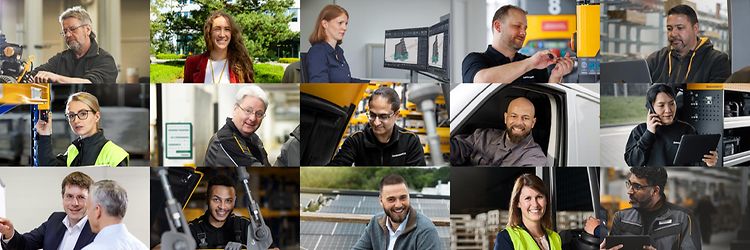
Together with our teams worldwide, we are shaping the transition to a more sustainable future. Trust, respect and partnership are the values that guide us. Anchored in our Sustainability Strategy 2030+, we promote a safe, healthy and inspiring working environment. With purposeful support, modern working conditions and shared responsibility, we create the basis for innovation, solidarity and strong cooperation.
Some of our initiatives
Responsibility for people in the value chain
Clear standards and mutual appreciation
Working well together shouldn't stop at your own factory gates. Jungheinrich is committed to fair working conditions, respect for human rights and partnership-based cooperation with suppliers – worldwide and along the entire value chain.
Responsibility for our customers