Creating sustainable value
Jungheinrich is a pioneer of sustainable material handling through electrification and energy-efficient automation. In our role as a sustainability enabler, we make our customers' warehouses efficient, circular-ready and safe. Sustainability is an integral part of our Strategy 2030+.
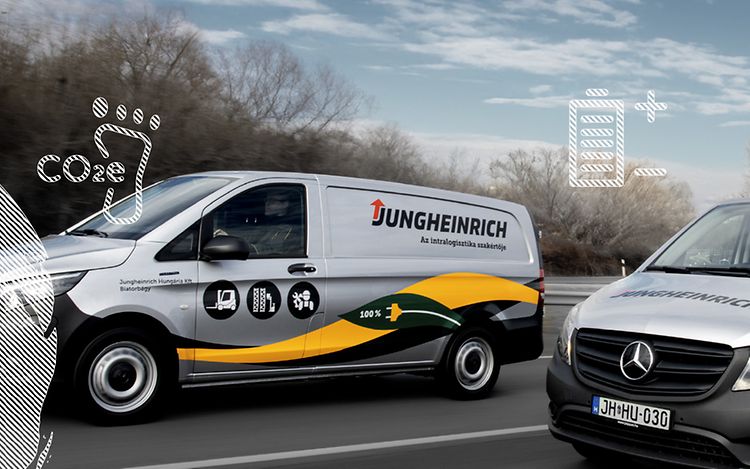
For 70 years, Jungheinrich has championed the electric drive – from our first forklift truck, the legendary Ameise, to our innovative trucks with energy-efficient lithium-ion technology. In our anniversary year 2023, we marked yet another milestone – Jungheinrich has waved goodbye to the combustion engine: our products are 100% electric!
Adopting a holistic approach to sustainability: As a family-owned company, we are invested in future generations and always looking at the bigger picture. We are not driven by regulations and legal requirements, but by our vision of creating sustainable value – for all stakeholders.
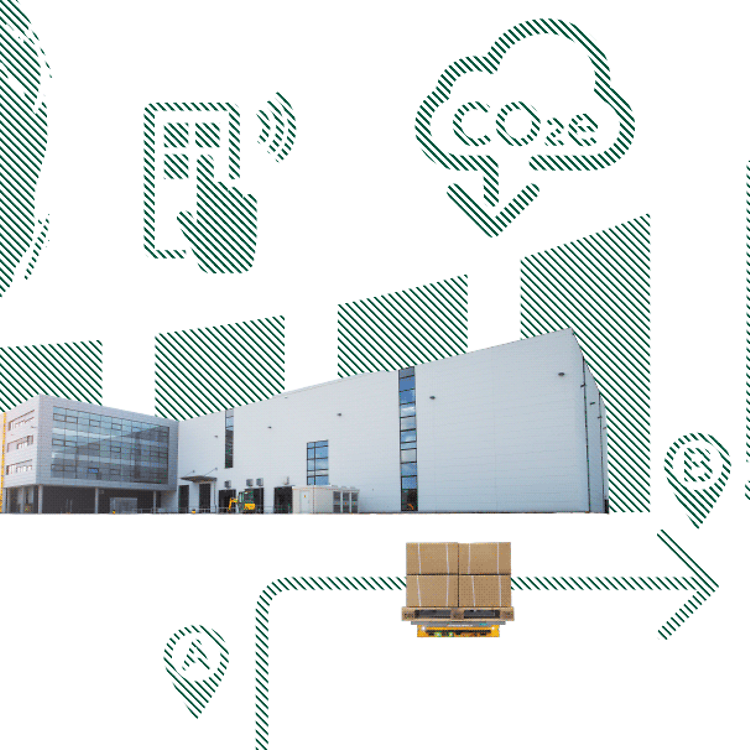
Sustainable material handling: Efficient. Circular-ready. Save.
The future of warehouses is more sustainable and, as a result, more economical than ever before. Efficient processes are combined with recyclable solutions and greater safety for people, vehicles and warehouse infrastructure. For Jungheinrich customers, this future is already beginning today.
Sustainability Strategy
Under our 2030+ corporate strategy, we are transforming our core business to achieve first-class productivity and sustainability.
Our Vision
We want to be one of the most sustainable companies in the world.
As a globally operating company, we are committed to creating sustainable value. Our aim is not only to fulfil legal requirements, but to exceed them. In doing so, we want to continue to recognise our pioneering role in the industry and set new benchmarks for responsible material handling.
We are committed to a future in which our products and solutions save resources, drive forward climate protection and at the same time strengthen fair working conditions, human rights and local communities worldwide. Together with our employees, partners and customers, we develop circular - and future-ready business models that combine ecological, social and economic sustainability.
Our strategic foundation
Our sustainability strategy is orientated primarily on the principles of the ESG model. Fully integrated into the 2030+ corporate strategy, we focus on the two pillars of environmental and social sustainability. The field of governance forms the foundation for our actions and ensures that we always have our goals as well as legal requirements in mind.
Based on this approach, we have developed six strategic focus areas:
- Decarbonisation and adaptation to climate change
- Promotion of the circular economy
- Our employees
- Responsibility in the supply chain
- Collaboration with our customers
- Sustainable corporate governance
Our ambitious sustainability goals
*Scopes 1 and 2 correspond to Jungheinrich's business operations. Scopes 1 to 3 correspond to the entire value chain. This includes reduction targets in accordance with SBTi.
Our CEO Dr Lars Brzoska on our sustainability strategy
Our contribution to the Sustainable Development Goals
We are dedicated to playing our part in achieving the 17 Sustainable Development Goals (SDGs) set out by the United Nations. Our sustainability strategy is focused on the following SDGs, where we see opportunities to exert our influence as a sustainability enabler in material handling.