Lead, lithium and sodium: where is battery technology heading?
Lithium-ion batteries have fundamentally transformed material handling, and we at Jungheinrich have helped shape this transformation from the very beginning. Now the technological spectrum is broadening. One thing is clear: the future of energy supply will be more diverse and sustainable.
The key insights
- Jungheinrich pioneered the establishment of lithium-ion technology in material handling and is already testing the next generation of cell chemistry – sodium-ion – under real-world conditions.
- Lithium-ion batteries are replacing traditional lead-acid technology in an increasing number of applications; however, both technologies still have their place.
- The battery of the future must combine performance, cost-effectiveness and the responsible use of resources.
- Sodium-ion batteries could broaden the technological spectrum and, in future, offer particular advantages where raw material availability, safety and cold resistance are required.
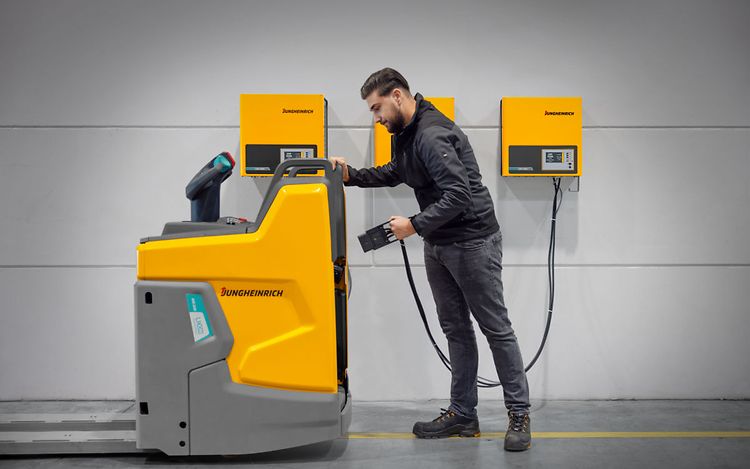
But which technology best meets these requirements? There is no clear-cut answer. “There is no such thing as the best or worst battery technology per se,” says Martin von Werder, Head of Energy & Drives at Jungheinrich. “The question is always which one best suits the customer’s application profile and local conditions and requirements.”
Whilst lead-acid batteries were the standard for many decades, more and more companies are now turning to lithium-ion technology. We at Jungheinrich played a key role in driving this change: In 2011, we became the world’s first manufacturer of industrial trucks to launch a series-production truck with a lithium-ion battery, at a time when the technology was still considered a niche in the industry. Today, we have installed over 100,000 lithium-ion batteries and have the largest fleet of lithium-ion trucks in operation worldwide. The technology has now become the norm in material
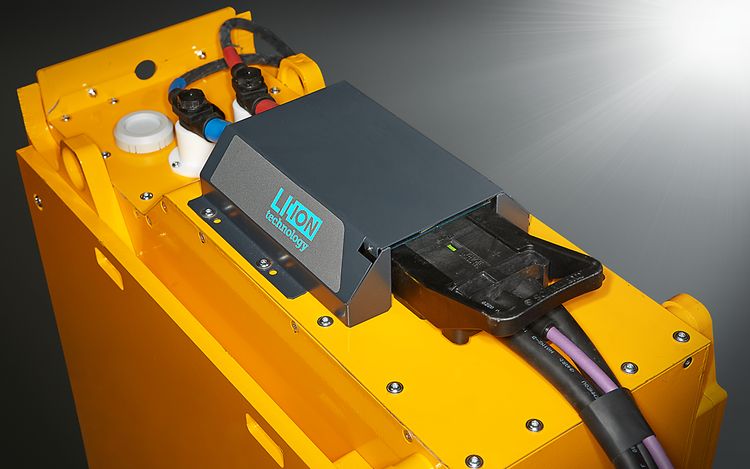
However, technological development continues. Just recently, here at Jungheinrich, we tested sodium-ion batteries under real-world conditions for the first time in collaboration with customers. This brings another cell chemistry into focus, one that could complement lithium-ion in the future.
“We do not simply want to monitor new technologies; we want to assess them from a technical perspective at an early stage and validate them under real-world operating conditions. We have successfully applied this approach to lithium-ion technology, and we are now taking the same approach with sodium-ion technology,” says Maik Manthey, CTO at Jungheinrich.
A battery is more than just its performance
Range, charging time and energy efficiency remain important criteria. However, anyone wishing to evaluate battery technologies comprehensively must consider their entire life cycle: from the extraction and processing of raw materials, through use, to reuse and recycling.
It is not just a question of which materials are contained in a battery. Equally crucial is how efficiently it operates over its service life and how long it can be used. There are also differences in efficiency: lithium-ion batteries convert up to 95 per cent of the charged electricity into propulsion and lifting power, whilst lead-acid batteries convert around 80 per cent.
Furthermore, a battery’s life cycle does not necessarily end once it has been used in a vehicle. Returned batteries from rental and used trucks are tested, reconditioned and reused at Jungheinrich, for example in refurbished JUNGSTARS. If the remaining capacity is no longer sufficient for mobile use, the battery can be given a second life as a stationary energy storage system.
Tracking the raw materials issue
As electrification increases, the importance of transparent and responsible supply chains is growing. Lithium, in particular, is a key focus: the European Union classifies it as a critical raw material. At the same time, supply chains in the mining sector are complex and multi-tiered. Without sufficient information, it is not possible to fully verify compliance with environmental and human rights standards.
We at Jungheinrich therefore urge our suppliers to disclose their supply chains and have become the first material handling company to join the Initiative for Responsible Mining Assurance (IRMA). Furthermore, we are focusing on lithium iron phosphate (LFP) cells. This LFP cell chemistry does not require cobalt or nickel, the extraction of which has come under criticism due to its potential impact on the environment and people.
Will sodium bring a new lease of life to the warehouse?
Whilst lithium-ion technology is now well established in many areas, attention is already turning to potential alternatives. Sodium-ion batteries represent a promising approach. Their cell chemistry does not require lithium. Sodium is widely available, can be sourced regionally and is easier to trace back to its origin.
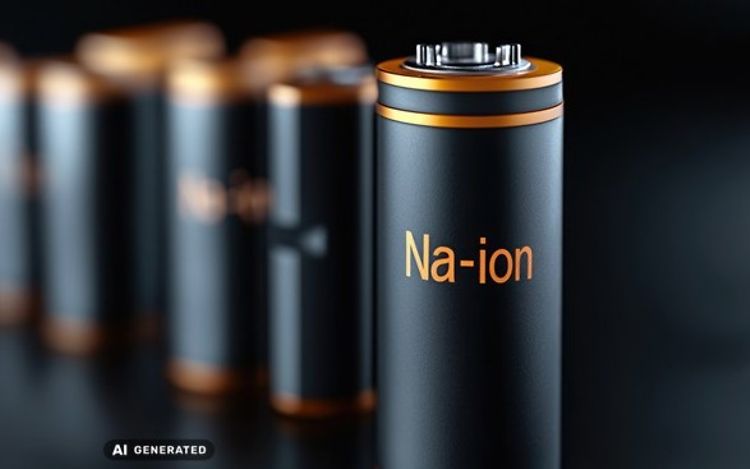
The technology also offers interesting characteristics in operation. Sodium-ion batteries can be used across a wide temperature range and deliver sufficient power even at low ambient temperatures. There are also potential advantages in terms of operational safety.
However, the technology is not yet ready for series production. Furthermore, its energy density is lower than that of lithium-ion batteries. For the same capacity, a sodium-ion battery therefore requires more space and weighs more. In counterbalance forklift trucks, which need mass as a counterweight anyway, this could be an advantage. For compact warehouse equipment, the requirements are more demanding.
Here at Jungheinrich, we recently tested the technology with six trucks at three customer sites across different operational environments. As with lithium-ion technology, we are putting it into practice at an early stage to understand its strengths and limitations under real-world conditions. One thing is already clear: sodium-ion batteries are unlikely to replace lithium-ion ones, but could usefully complement the existing range.
The future holds more than one battery chemistry
The development of modern battery technologies demonstrates how closely innovation, sustainability and cost-effectiveness are interlinked today. There is a demand for energy storage solutions that are powerful and economical, whilst also enabling the responsible use of raw materials.
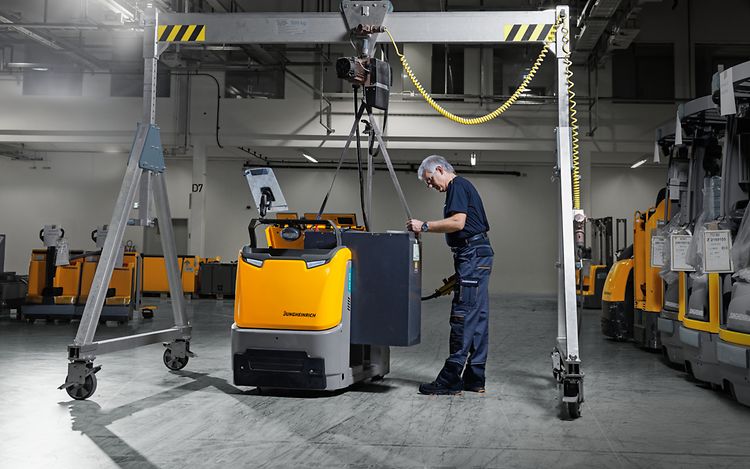
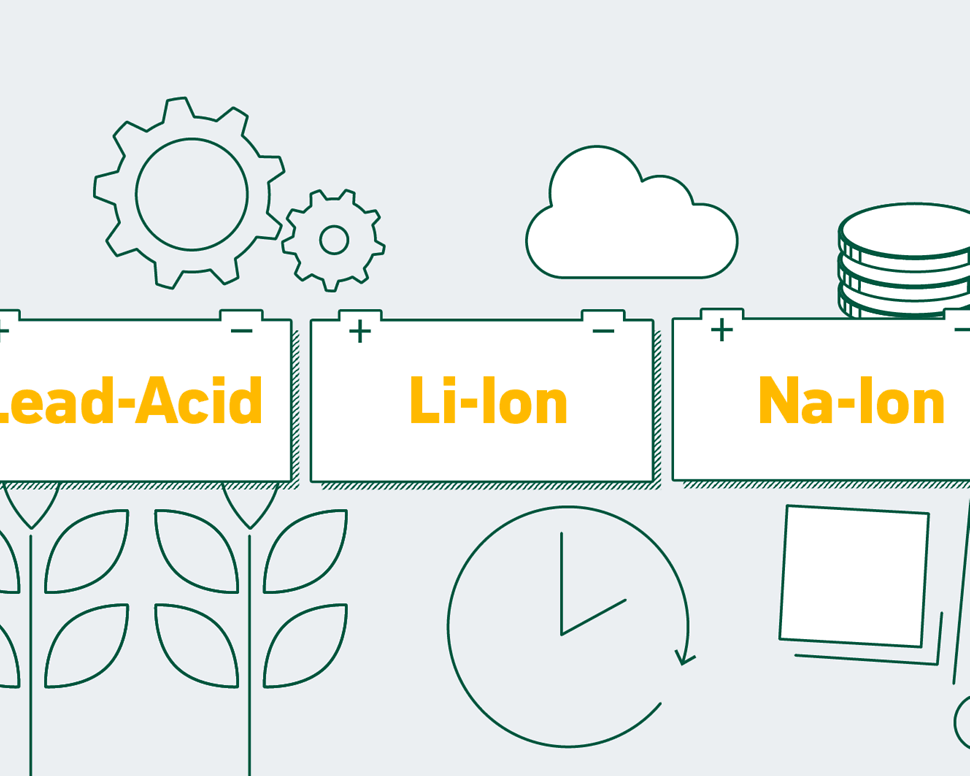
Lead-acid, lithium-ion and, in future, possibly sodium-ion batteries each have their own strengths and limitations. Which technology is used therefore depends on the specific requirements. Whilst lithium-ion batteries are proving their worth in an increasing number of applications, lead-acid remains relevant for certain application profiles. Sodium-ion could open up new possibilities in future where other properties are required.
The energy supply for tomorrow’s material handling is therefore unlikely to be determined by a single battery technology. The key will be to find the right cell chemistry for the right application, whilst simultaneously closing loops, making supply chains more transparent and further developing new technologies. After all, the energy transition in the warehouse does not begin with the vehicle, but with the battery itself.