70 years of reach trucks: How experience paves the way for the next step in development
70 years ago, our company founder, Friedrich Jungheinrich, introduced the reach truck concept to Europe. Today, this experience is being channelled into a new generation of trucks that is systematically tailored to the requirements of modern warehouses.
The key insights
70 years of reach truck expertise: Since the launch of the first “Ameise Retrak” in 1956, Jungheinrich has consistently developed reach trucks in line with the demands of day-to-day warehouse operations.
Experience meets data: insights gained from 70 years of development are now complemented by the analysis of operational data from around 30,000 reach trucks and are directly incorporated into new vehicle concepts.
The ETV 4i as the next step in development: The latest generation of the ETV-i family has been developed for particularly demanding warehouse applications and increases pallet handling efficiency through faster lift and mast movements as well as modern assistance systems.
The history of the reach truck at Jungheinrich began in the 1950s. Warehouse space was becoming scarcer, aisles were getting narrower, and companies were looking for ways to use the available space more efficiently. At that time, Friedrich Jungheinrich recognised the potential of an idea originating in the USA: a truck with a mast that could be moved forwards and backwards.
In 1956, Jungheinrich introduced the reach truck to Germany and Europe with the “Ameise Retrak”. Even the early models enabled space savings of up to 30 per cent through narrower working aisles, laying the foundations for a development that continues to this day.
Innovation driven by practical application
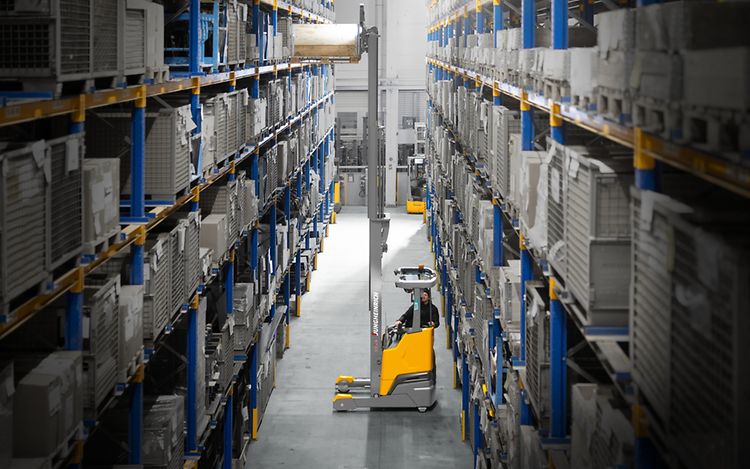
A significant step forward was taken in 2018 with the ETV 216i. As the world’s first series-production reach truck with a permanently integrated lithium-ion battery, it no longer required a conventional battery tray. This improved comfort for drivers: there was more legroom, and visibility of the wheel arms and load was also enhanced. The current ETV-i range is still based on this concept today.
From practical experience to operational data
“We continue to speak with customers and the sales team, but today we can also see from the operational data exactly how work is actually carried out in the warehouse,” says Henning Rust, Product Manager for Reach Trucks at Jungheinrich.
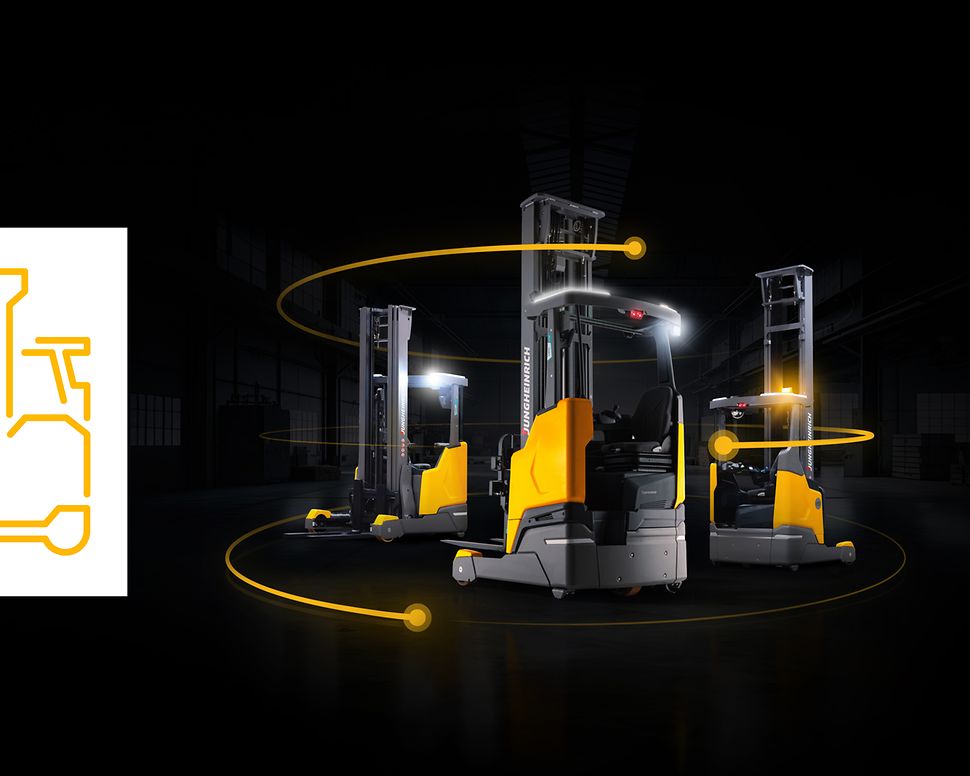
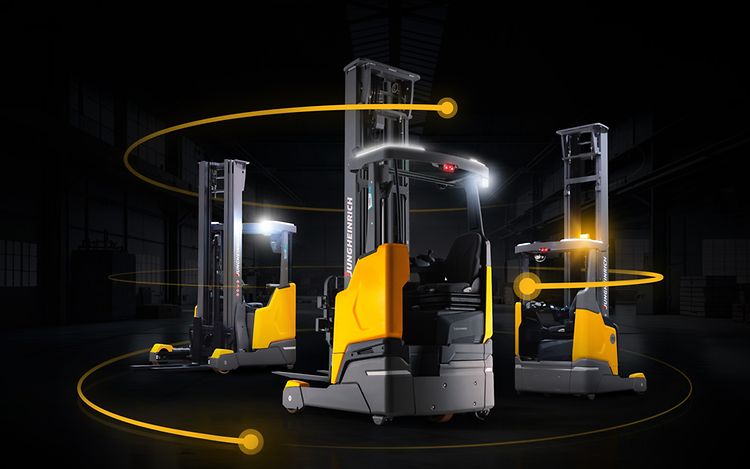
An analysis of aggregated data from around 30,000 reach trucks revealed just how differently the vehicles are used in practice. This led to the division into the ETV 2i, ETV 3i and ETV 4i series, each designed for specific tasks within the warehouse.
The next chapter in the history of reach trucks
Whilst in 1956 the main focus was on making better use of limited storage space, today the emphasis is on speed and performance. With intensive use, every movement and every second counts.
The ETV 4i is now continuing this story. As with the first Retrak, the focus is on a specific challenge from everyday warehouse operations: How can pallet throughput be increased when trucks are in operation almost non-stop across two or three shifts? As the most powerful model, the ETV 4i has recently joined the new ETV-i family and is designed precisely for such intensive applications.
The answer does not simply lie in higher travel speeds. What happens at the racking is far more crucial: The ETV 4i lifts and lowers pallets more quickly and positions the mast more swiftly. Particularly with high lift heights and a high volume of stock-in and stock-out operations, the seconds saved add up – resulting in noticeably smoother processes.
To ensure that this increased performance can be utilised in a controlled manner, assistance functions help operators to position loads precisely.
This is particularly helpful when moving pallets at great heights. With load capacities ranging from 1,400 to 2,500 kilograms and lift heights of up to 14 metres, the ETV 4i is thus equipped for demanding applications in distribution centres and production supply.
70 years of experience as a foundation
From the first Retrak trucks to the current ETV-i range, one thing remains true: innovation arises where it creates tangible benefits. The ETV 4i continues this 70-year legacy of development.
In the “Making of” video, you can take a look behind the scenes of our new ETV 4i: