Why there is no longer a one-size-fits-all material handling solution
Material handling is changing – and with it, the demands placed on solution providers. Our Chief Sales Officer, Nadine Despineux, explains why tailor-made solutions are more important today than ever before.
The key insights
Companies today are taking very different approaches to making their material handling fit for the future – ranging from cost-effective industrial trucks to comprehensive automation.
Successful solutions do not stem from the technology itself, but from a deep understanding of the customer’s specific processes.
With its Strategy 2030+ and the current “Race for Pole Position”, Jungheinrich is consistently developing its portfolio in line with these customer requirements.
Whilst some companies are already automating their warehouses to a large extent, others are primarily looking for cost-effective solutions for standardised applications. The requirements for material handling today are evolving as diversely as the companies themselves.
At the same time, many businesses face similar challenges: supply chains remain volatile, economic conditions are changing rapidly, and the pressure to make processes efficient and resilient is constantly increasing. Yet the responses to these challenges are becoming increasingly diverse.
Depending on their sector, company size, skills shortage situation or scope for investment, companies prioritise different areas. Some invest in fully automated material flows, whilst others initially modernise their fleet, digitise individual processes or seek cost-effective solutions for day-to-day operations.
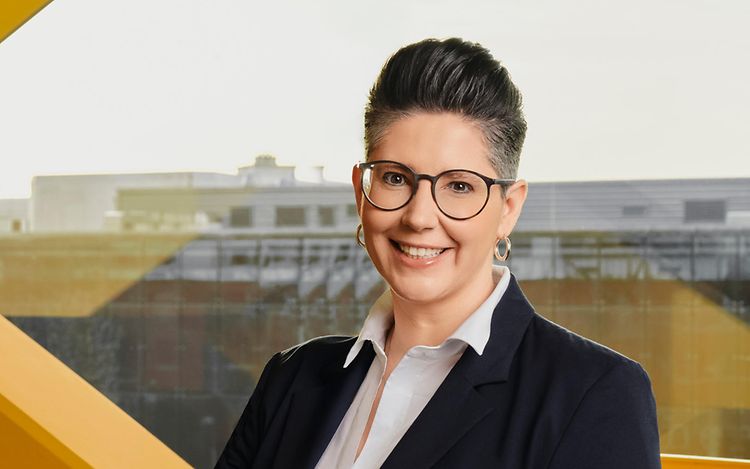
“Material handling is no longer a uniform market,” says Nadine Despineux, Chief Sales Officer at Jungheinrich. “That is why there is increasingly rarely a single ‘right’ solution for everyone.” 
Suppliers of material handling solutions must also adapt to precisely this development.
The role of suppliers is changing
Whereas companies used to have similar requirements, their needs are now significantly more diverse. Accordingly, a portfolio is needed that covers a range of different starting points – from cost-effective industrial trucks through digital solutions to complex automation systems.
The key is not to deploy as much technology as possible. The key is to find the right solution for every situation and every customer requirement.
“Ultimately, it’s always about supporting the flow of materials as effectively as possible. That could be a vehicle, a mobile robot or a fully automated warehouse. What matters is not the technology itself, but whether it fits the company’s processes and objectives,” says Despineux.
This also changes the expectations placed on suppliers. It is no longer just innovative products that are in demand, but partners who understand their customers’ processes and support them over the long term.
After all, the actual further development often only begins once a solution has been commissioned. Companies grow, requirements change and systems must remain reliably available at all times. That is why digital transparency, data-driven optimisation and high-performance service concepts are becoming increasingly important. Maintenance, spare parts supply and ongoing operational support help to safeguard investments in the long term and unlock further potential for optimisation.
“Today, companies need not only technologies, but partners who understand their processes and work with them to further develop solutions,” says Despineux. “It is precisely this long-term collaboration that is becoming increasingly important in the face of growing complexity.”
How Jungheinrich is responding to change
At Jungheinrich, this approach shapes the company’s strategic development. With our Strategy 2030+, we have set ourselves ambitious growth and innovation targets. The focus is on supporting customers even more effectively as they progress along their individual development paths – from cost-effective industrial trucks, such as AntOn by Jungheinrich, and automation solutions through to digital services and a comprehensive after-sales service.
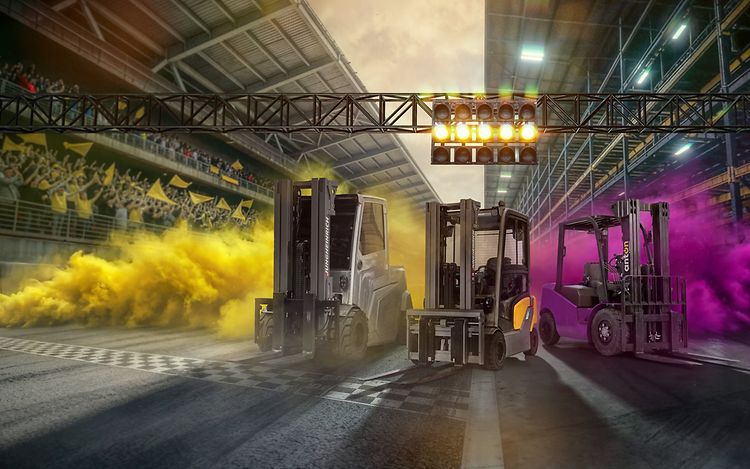
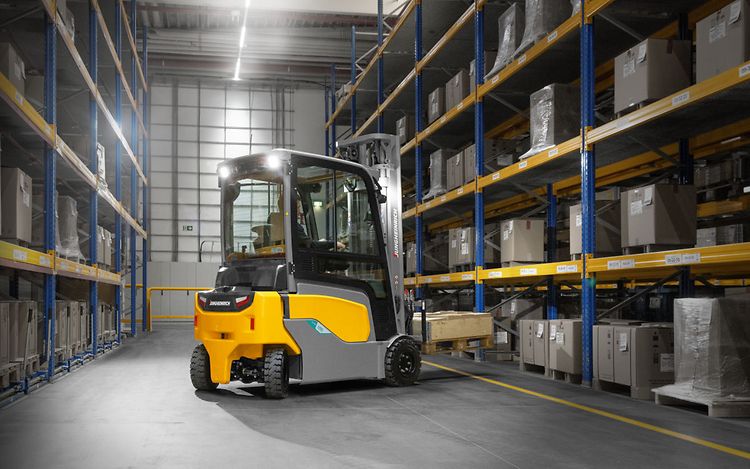
This commitment is also underlined by our “Race for Pole Position” campaign, which accompanies the market launch of our new EFG 2/2i and EFG 3/3i series. These vehicles exemplify our approach of consistently aligning innovation with our customers’ needs. Greater space efficiency, a significantly improved operator station, three performance classes, and integrated lithium-ion technology demonstrate how specific customer needs are specifically incorporated into our product development.
“The diversity of customer requirements will continue to grow. Our aim is not to view this diversity as a challenge, but as an opportunity: by developing solutions that are precisely tailored to our customers’ specific requirements,” said Despineux.
The future of material handling will therefore not be shaped by a single technology. The companies that succeed will be those that understand a wide variety of requirements and provide the appropriate solutions. This is precisely Jungheinrich’s aim: to support customers on their individual journey towards greater efficiency, productivity and future-proofing.