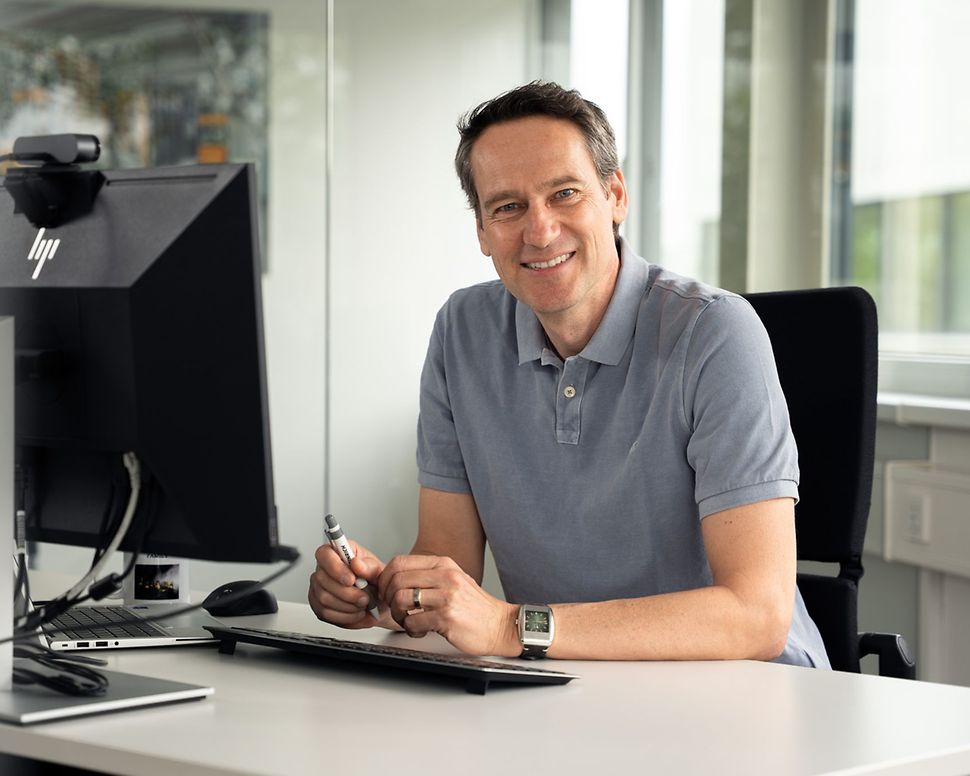
Skills shortage in material handling: “The question is no longer whether automation will happen”
Skills shortages and growing demands for smooth, efficient warehouse operations: Dr Tobias Harzer explains why the future of material handling lies in the intelligent interaction between humans and machines, and how successful automation can be achieved.
Material handling is undergoing fundamental change. Companies must make processes more efficient, maintain stable supply chains and, at the same time, cope with a growing shortage of skilled workers – particularly in warehouse and production environments. Particularly when it comes to standardised transport tasks, it is becoming increasingly difficult in many places to fill vacancies in the long term. Automation is therefore evolving from a matter of efficiency into a strategic necessity.
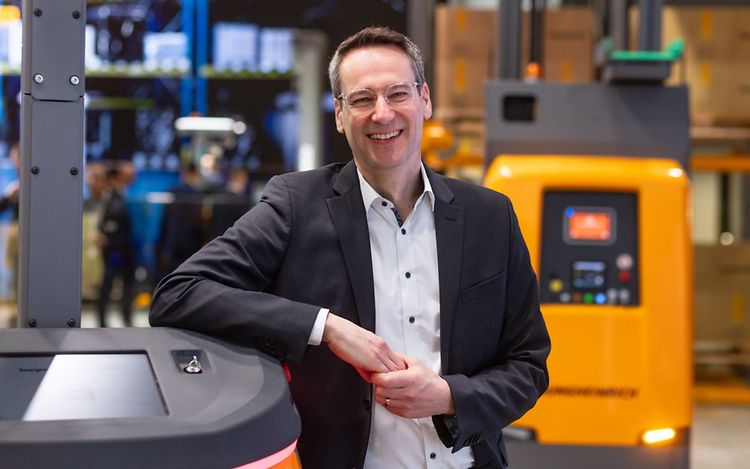
Dr Tobias Harzer, Executive Board Member for Automation & Warehouse Equipment at Jungheinrich, discusses why autonomous systems already play a key role today and why successful automation must always take people into account.
Mr Harzer, why is automation currently becoming so much more important?
Automation helps to reliably stabilise precisely such processes and deploy staff more effectively where human flexibility, experience and situational decision-making are particularly important.
How far has the technology actually come today? Which tasks can already be automated today?
Tobias Harzer: Automation is no longer just a vision for the future. It is already a reality in many warehouse and production environments today. We are seeing a clear shift: companies are thinking less and less in terms of individual technologies and increasingly in terms of end-to-end processes. It is not simply a matter of placing a robot in a warehouse. It is about designing material flows intelligently and optimising processes holistically. That is why, together with our customers, we analyse their specific workflows and develop tailor-made solutions comprising vehicles, software and automation components.
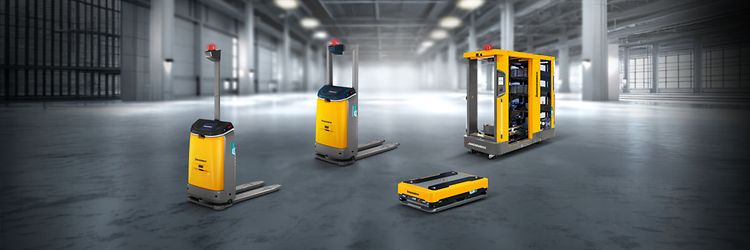
A good example is internal material transport. Many of these processes can already be reliably automated today. Autonomous mobile robots, for example, transport pallets between goods-in, the warehouse and production, or supply production lines with materials – autonomously and around the clock.
“Automation has long been a reality!”
What makes modern autonomous mobile robots so capable today?
Tobias Harzer: Modern autonomous mobile robots operate far more flexibly than many people realise. They use sensors, cameras and, above all, intelligent software to map their surroundings in real time and dynamically adjust their routes. This enables them to move freely through warehouse and production environments, detect obstacles and react independently to changes in the working environment.
What is currently the biggest technological challenge?
Tobias Harzer: For a long time, I would have said: navigation. Today, that has changed. The real challenge is the intelligent coordination of many vehicles within complex warehouse environments. For some customers, 20 or more autonomous vehicles move simultaneously through warehouse and production areas. The real challenge lies in organising these traffic flows safely, efficiently and without disruption.
How is this achieved?
Tobias Harzer: To do this, we intelligently network vehicles, warehouse management systems and material flow software. Transport orders are prioritised, routes are dynamically adjusted and processes are controlled in real time.
“The real challenge is the traffic flow.”
What role will humans play in the warehouse in future?
Tobias Harzer: One of the biggest misconceptions is the assumption that automation simply works by replacing people. In practice, projects often fail precisely when the human factor is not sufficiently taken into account. Completely unmanned warehouses therefore tend to remain the exception in most cases. In reality, hybrid environments are emerging in which people and autonomous systems work together in parallel.
“Automation only works with people!”
Do employees still worry about being replaced?
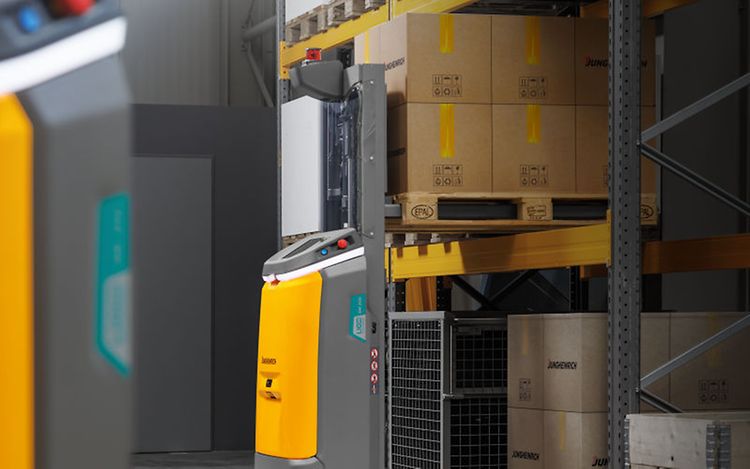
However, our experience also shows that as soon as employees see how reliable and supportive the systems are, acceptance grows very quickly.
Which tasks will remain distinctly human in the future?
Tobias Harzer: Automation is particularly effective for standardised, repetitive processes. At the same time, there are many tasks where flexibility, experience and situational decision-making remain crucial. That is precisely where people remain indispensable.
In your view, what constitutes successful automation?
Tobias Harzer: The real strength lies in intelligently combining both worlds: assigning the right tasks to the right resources and involving employees at an early stage.
What does the material handling of the future look like to you?
Tobias Harzer: The future of material handling will not be a ‘humans versus robots’ scenario. It will consist of people and automation working together more intelligently than they do today.
We have demonstrated this, for example, with our partner Wildeboer GmbH:
Automation as a strategic growth area
For us at Jungheinrich, automation is one of the key growth areas of our Strategy 2030+. As a systems integrator, we focus on fully integrated and networked material flow solutions, with the aim of linking automated and non-automated processes as seamlessly as possible. This goes far beyond the mere automation of transport processes. We are already implementing large-scale automation projects, including AS/RS systems, for many customers.
Because one thing is clear: the demand for intelligent automation solutions will continue to rise – not only due to growing efficiency requirements, but also because of demographic change and the increasing shortage of skilled workers.